We Buy Used Chillers in Roanoke, Virginia
Start with the machine’s location and exit route
For a demolition contractor representing an equipment owner in Roanoke, the first useful question is not simply what the chiller is worth. It is whether the unit can be removed without blocking the work, disrupting building operations, or creating a conflict with the demolition sequence. Map the route from the chiller’s current position to the point where a truck can receive it. Include turns, doorways, corridors, ramps, loading areas, and any change in floor level; a route that looks clear on a plan may have a fixed obstruction or a narrow turn in practice.
A mechanical room may serve several parts of a property and have little space for staging. Identify equipment, piping, panels, doors, and work areas that must remain accessible to building staff. Ask the owner which routes must stay open and whether other contractors, occupants, or deliveries will be using them during removal. Share those constraints before pickup is arranged. The goal is to develop a removal plan around the property’s actual access needs, rather than assume the chiller can be moved directly from its position to a truck.
Describe the chiller without guessing at a perfect category
Useful identification can be straightforward: send the manufacturer and model if readable, any visible serial or nameplate information, the approximate capacity if known, and clear photos of the unit and surrounding area. Include the number of machines and whether the equipment is installed, stored, or already separated from other systems. If records are available, operating history, maintenance documents, or an equipment schedule can help clarify what is being offered. Do not delay an inquiry just because some details are missing.
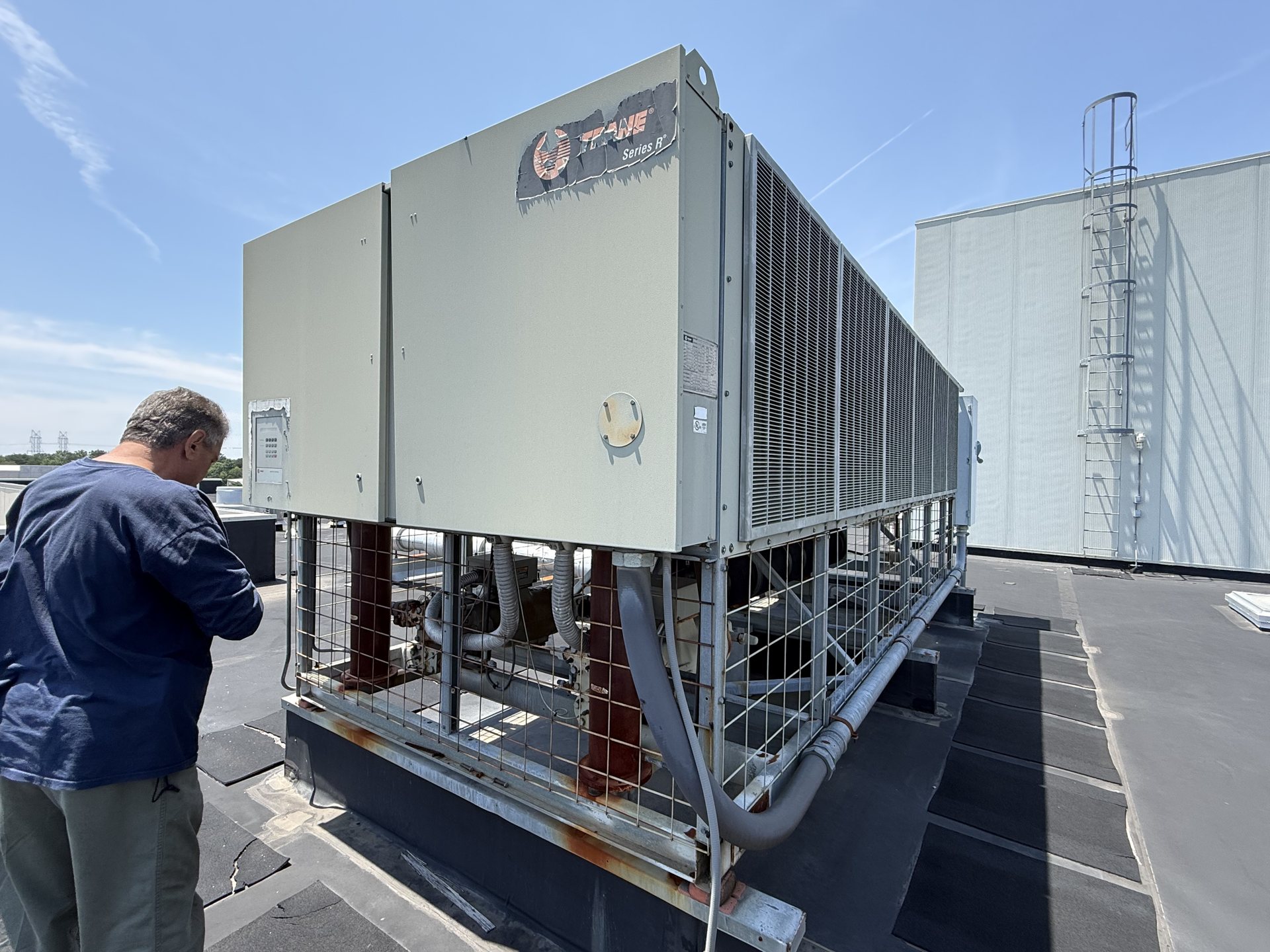
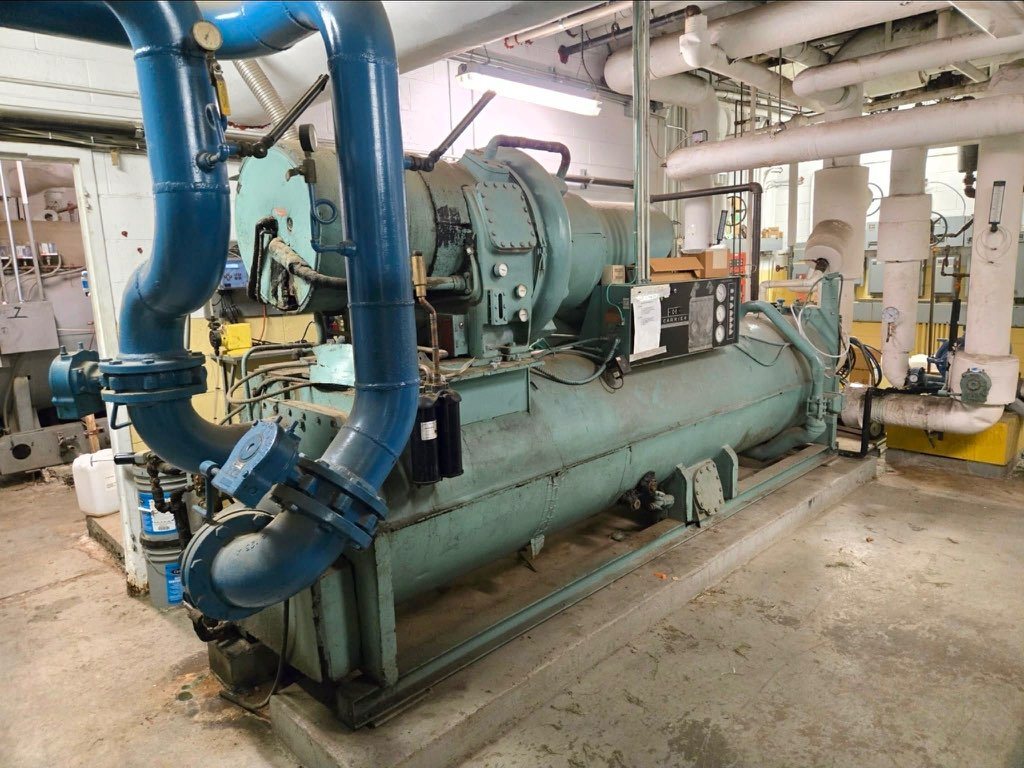
A chiller may be centrifugal, screw, scroll, modular, or another configuration; it may also be air-cooled or water-cooled. Those descriptions can overlap: compressor type and cooling method describe different aspects of the same machine, so the seller does not need to pick one flawless label before requesting a review. We consider equipment across all tonnages, including units below 20 tons, machines from 20 to 2,000 tons, and units over 2,000 tons. All refrigerants and equipment conditions can be submitted for consideration. That is not a promise to purchase every unit; any offer depends on review of the actual equipment and agreed terms.
Resolve scope before anyone schedules a pickup
Before a buyer arranges removal, confirm what is included in the proposed transaction. Is the offer for one chiller or several? Are loose components, controls, or other identified items part of the scope, or are they staying with the owner? Mark the equipment clearly in photos or a simple list if there are similar units nearby. The demolition contractor should also confirm who has authority to approve the sale and who can agree to access, removal, and payment terms on the owner’s behalf.
Be explicit about what must remain in place. A building team may need access to adjacent equipment, electrical or control areas, service paths, or other parts of the mechanical room even while removal work is planned. Point out anything that cannot be blocked, moved, or disturbed. If the chiller is connected to systems that are outside the sale, identify that boundary in advance. Clear scope reduces the chance that the buyer and property team arrive with different expectations about what is being removed.
Make the route review practical
For a Roanoke project, provide current site information rather than relying only on an old drawing or a general description such as “ground floor.” Photos taken from several positions can show the unit, the room entrance, the corridor, the route outside, and the proposed truck access point. Mention doors or openings that may limit passage, overhead or floor obstacles, restricted access times, and whether the route crosses an area that building staff need to use. If there is more than one possible exit, describe the alternatives and ask which information the buyer needs to review them.
Also flag staging and scheduling constraints early. Tell the buyer whether the area is shared with ongoing operations, whether another contractor controls the work zone, and whether the owner has a required sequence for demolition. Do not make assumptions about lifting or transport methods. Removal may involve disconnects, refrigerant recovery, loading, hauling, cranes, or rigging, but the method and scope should be reviewed and agreed before work is scheduled. The seller should not attempt to test, disconnect, recover refrigerant, or rig the equipment.
What to provide when requesting an offer
A concise inquiry can include the Roanoke site location, equipment count, available nameplate details, photos, known tonnage, cooling method or compressor type if known, and a short condition summary. Add the proposed removal window only if the owner has authorized one, and explain any building-access rules or deadlines that could affect planning. If a chiller came from a data center, power plant, hospital, campus, or plant shutdown, say so as useful background; equipment from those settings can be considered, but its origin does not determine whether an offer will be made.
Describe known condition honestly without presenting an unverified diagnosis as fact. For example, distinguish “removed from service” from “confirmed failed,” and say when information is unknown. Include refrigerant information if available, but an owner does not need to resolve every technical detail before submitting the machine for review. The more clearly the equipment and removal conditions are represented, the more useful the review can be. An inquiry is a request for consideration, not a commitment that the chiller will be purchased.
Clarify payment and removal responsibilities
We buy used industrial water-cooled and air-cooled chillers, including centrifugal, screw, and scroll equipment, and provide cash offers with upfront payments when a purchase is agreed. Ask how the payment amount, timing, and agreed scope will be documented, and confirm who is authorized to accept payment for the equipment owner. Offers depend on review and agreed terms; do not treat a preliminary discussion as a final commitment until the scope and conditions are confirmed.
For agreed purchases, we handle and cover freight, cranes, rigging, refrigerant recovery, disconnects, loading, and hauling. Confirm that the specific work and access conditions for this site are included in the agreed plan. The demolition contractor should coordinate with the owner and relevant building staff so that access, work-area boundaries, and required clearances are understood. Keeping those responsibilities explicit helps distinguish the buyer’s removal scope from unrelated demolition work or work the property needs to arrange separately.
Use a final coordination check before pickup
Before a date is set, confirm the chiller being sold, the approved scope, the route to the truck, the accessible areas that must remain open, and the site contact authorized to coordinate entry. Recheck that photos and access details still reflect current conditions; a changed work zone or blocked route can affect the plan. Make sure building staff and other contractors know which access points will be used and what areas must remain available to them.
When you request an offer, you do not need to have every technical answer or select a precise chiller category. You do need to communicate what is known, identify what remains uncertain, and surface practical restrictions before removal is arranged. That gives the buyer a basis to review the equipment and the pickup conditions, while helping the owner and demolition team avoid preventable scope or access misunderstandings.