Hospital and Campus Chiller Removal in Virginia
A chiller sale planned around patient care
Removing an industrial chiller from a Virginia hospital campus is a facilities decision as well as an asset sale. The equipment may serve a patient building, an outpatient facility, a central utility plant, or several buildings through a shared system. The team evaluating the sale needs to understand what the machine serves before determining how it can be released.
We buy water-cooled and air-cooled centrifugal, screw, and scroll chillers of all tonnages and refrigerants, including 20 to 2,000+ tons. We review each opportunity rather than assuming that every machine or site will result in a purchase.
Map the chiller to the areas that depend on it
Tell us which building or plant houses the chiller and, to the extent known, what the cooling system serves. Different spaces can have different requirements for comfort, ventilation, or environmental control. A chiller serving a shared plant may have dependencies that are not obvious from the equipment room alone.
If the outgoing machine is part of a replacement, explain whether it is still operating, has been taken out of service, or is awaiting release after a changeover. The hospital’s facilities and clinical stakeholders can identify the approvals needed to protect the areas that remain occupied.
Share records without putting the unit through a test
A nameplate photograph and any readily available manufacturer, model, serial number, capacity, and refrigerant details are a useful starting point. Existing maintenance records or a description of known issues can help us understand the chiller. You do not need to energize, run, or test it for the buyer.
Photographs of the machine and surroundings can clarify the opportunity, subject to the hospital’s privacy and security policies. Do not include patient information or other sensitive material in the initial inquiry. If photographs are restricted, a basic written description can start the conversation.
Work within hospital access and infection-control procedures
Removal planning should account for the hospital’s own rules on construction activity, dust control, barriers, escorts, and movement through occupied areas. Applicable requirements depend on the location and the facility’s assessment; a buyer should ask the hospital team what applies instead of assuming a standard route or protection plan.
Identify any access restrictions involving patient entrances, emergency routes, deliveries, or nearby departments. The goal is to develop a removal approach the hospital can review against its operating needs, not to ask clinical teams to work around an undefined equipment move.
Explain the physical path from plant to loading area
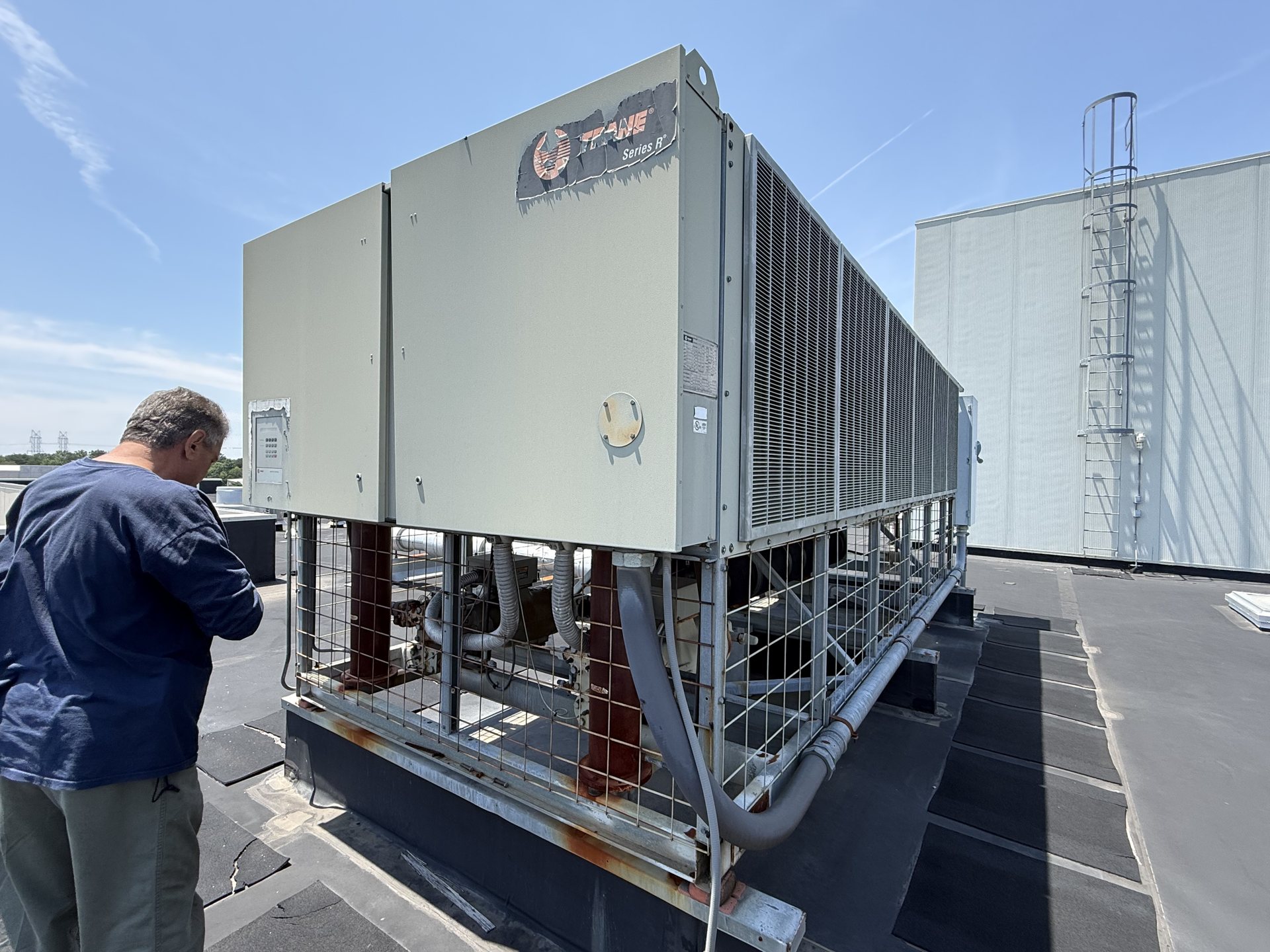
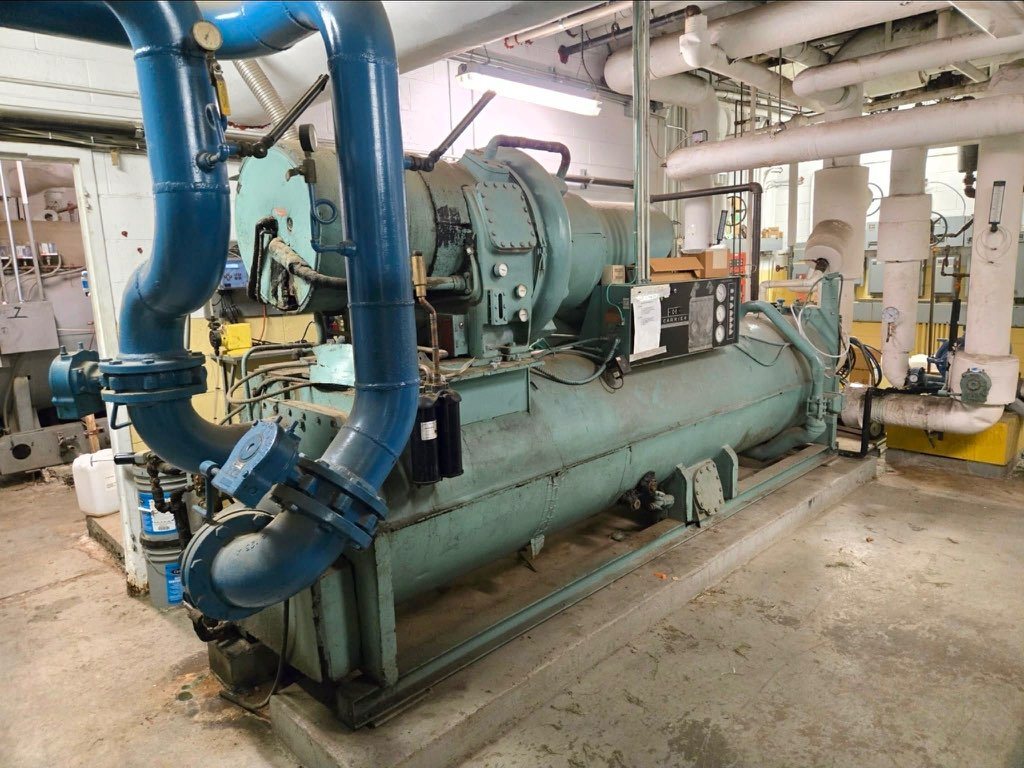
A basement mechanical room, rooftop installation, and exterior chiller yard each create different access questions. Share known doorway sizes, corridors, floor loading limits, lift access, and obstacles between the unit and the point where it can be loaded. If a crane or temporary opening is needed, note any available information about access and who approves its use.
We handle and cover crane work, rigging, loading, freight, and hauling for the purchased chiller under the agreed scope. The hospital does not need to rig or move the unit to request an offer.
Keep shared utilities and responsibilities clear
Describe nearby piping, electrical equipment, controls, and other plant components that must remain. It is useful to identify what is owned by the hospital, what is included in the proposed sale, and what serves other equipment. Available drawings and facility knowledge can help define those boundaries.
We handle and cover refrigerant recovery and the required disconnects for the purchased equipment. The hospital should identify its approval and access requirements, while the buyer’s work is coordinated under the agreed plan. The seller is not asked to handle refrigerant or disconnect the chiller.
Review value alongside the practical scope
We provide cash offers and payment upfront under the accepted purchase terms. Equipment details, condition, access, and removal requirements all matter to the review. When comparing proposals, look at whether each one includes recovery, disconnects, crane and rigging, loading, freight, and hauling rather than focusing on the headline amount alone.
Before accepting, confirm the assets included, any excluded work, and how site-specific requirements affect the plan. Agreeing on those points gives the hospital’s facilities, procurement, and project teams a clearer basis for their internal review.
Start with the information already available
A useful first inquiry can include the chiller identification, location, approximate size, known status, and an outline of the removal route. Add any known campus access rules or project dependencies and identify a facilities contact who understands the site. Existing records are helpful, but a complete engineering package is not a prerequisite for a discussion.
We can then evaluate the equipment and the proposed work, clarify questions, and determine whether to make a cash offer. The result should be a defined buyer transaction that recognizes both the outgoing asset and the hospital activities continuing around it.