Data Center Chiller Decommissioning in Northern Virginia
Sell an outgoing chiller without losing sight of the live data center
A chiller replacement at a Northern Virginia data center is more than an equipment sale. The outgoing machine may sit beside operating cooling equipment, share access with active work, or be part of a larger change in the cooling architecture. The sale needs to fit the facility’s operating and security requirements rather than assume the building is empty.
We buy water-cooled and air-cooled centrifugal, screw, and scroll chillers, across all tonnages and refrigerants, including equipment from 20 to 2,000+ tons. An inquiry is not a commitment to purchase; the equipment, removal scope, and site conditions inform whether we can make an offer.
Identify the exact asset and its place in the cooling system
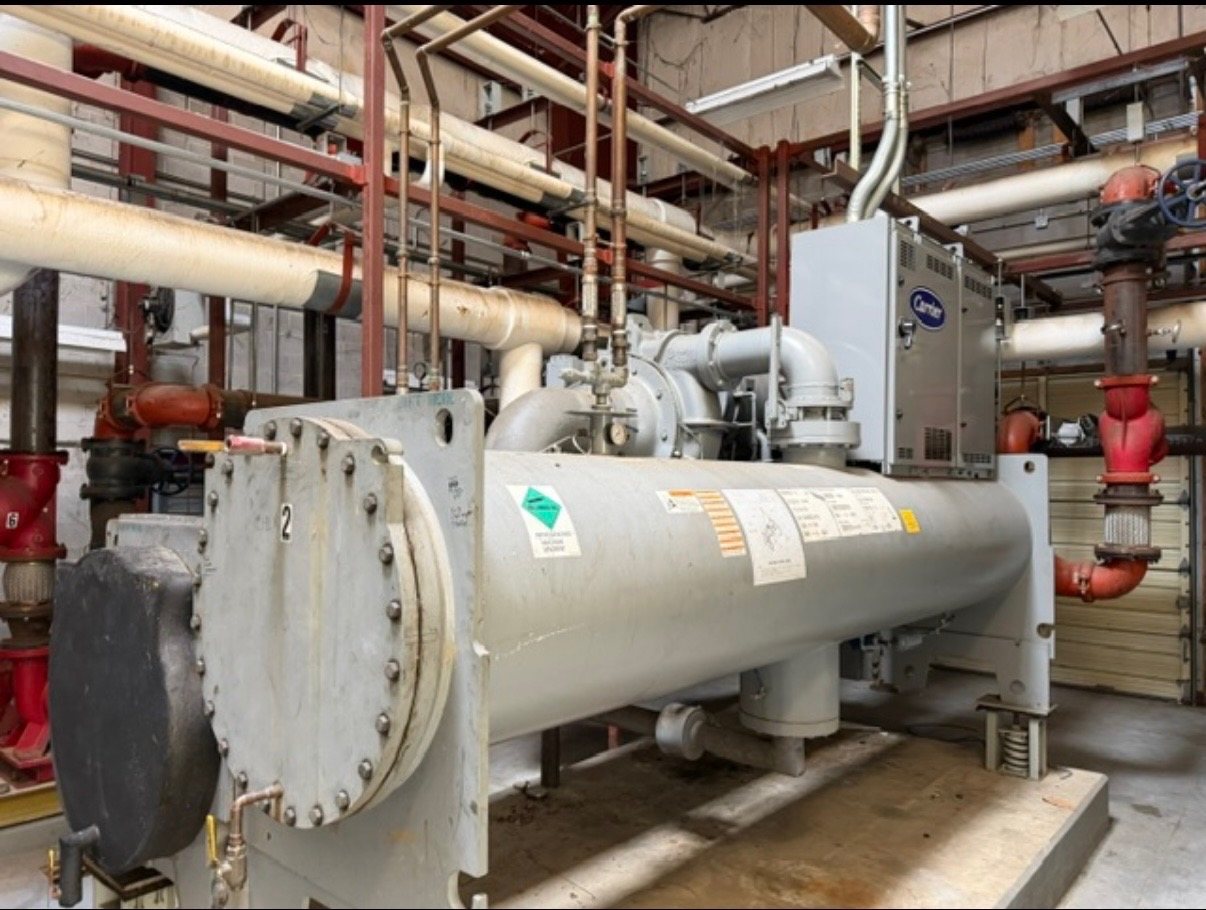
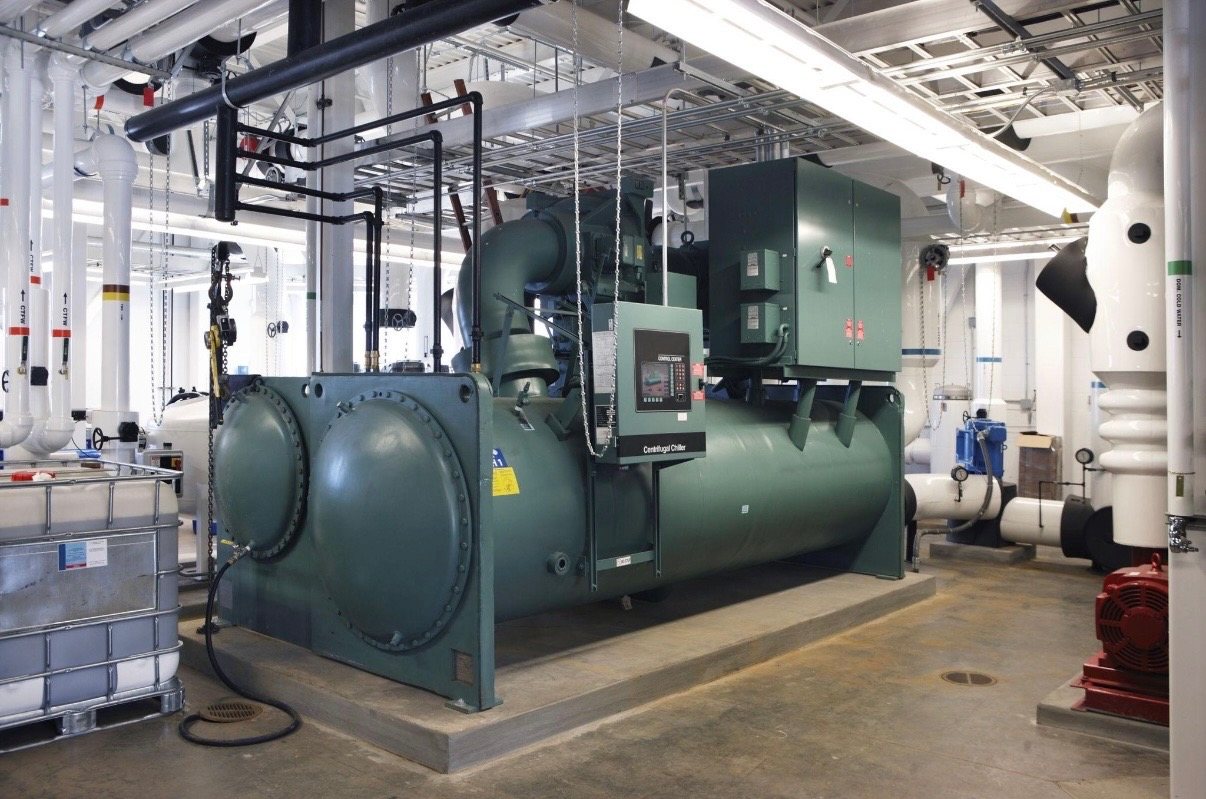
Start with the chiller’s manufacturer, model, serial number, nominal capacity, refrigerant, and location if those details are available. Photos of the nameplate, whole unit, and surrounding space can help distinguish the machine being sold from similar units in a mechanical yard or plant room. Existing documentation is useful, but you do not need to test the chiller for us.
Explain whether the machine is still operating, already offline, or awaiting a replacement. Note whether the proposed sale includes only the chiller or also items such as controls, starters, pumps, or heat exchangers. Shared plant components should not be assumed to transfer with the machine.
Coordinate around capacity and changeover decisions
Facility teams may need to maintain a particular level of cooling capacity or redundancy while equipment is removed. Tell the buyer about the facility’s intended changeover and any dependencies that affect when the outgoing unit can be released. The buyer should not assume that a machine is available simply because a replacement has arrived.
Discuss which parties must approve the release, including the owner, operator, or project manager where applicable. Existing maintenance records and operating history can inform an offer; there is no need for the seller to run, energize, or perform a test on the equipment.
Describe the route, not just the mechanical room
A chiller’s removal path can matter as much as its nameplate. Share known doorway and opening dimensions, floor or roof load restrictions, access to loading areas, and any obstacles along the route. An air-cooled unit on a roof and a water-cooled machine in a crowded plant room present different planning questions.
If a crane location, building opening, or temporary access route is contemplated, identify any known constraints and who controls access. We handle and cover crane work, rigging, loading, freight, and hauling as part of the agreed purchase scope; the seller is not asked to rig the equipment.
Define interfaces with equipment that stays
Chillers can connect to shared piping, electrical distribution, controls, and building management systems. Identify which nearby equipment remains in service and share relevant drawings or interface information when available. The goal is a clear boundary between the machine being purchased and systems the facility continues to operate.
We handle and cover the required disconnects and refrigerant recovery for the purchased equipment. Site-specific coordination and permissions still need to be settled with the facility. Do not disconnect anything or handle refrigerant to prepare for an inquiry.
Plan for secure access and working around live operations
Data center access rules can affect who may enter, what equipment may be brought on site, and how material moves between secured areas. Explain the facility’s applicable escort, check-in, photography, and work authorization requirements before the removal plan is finalized. Share only the information needed for the transaction under your organization’s security procedures.
Also flag operating equipment, sensitive areas, or concurrent work near the proposed route. A practical discussion of access and separation helps the buyer assess the job without treating a live site like an unrestricted demolition area.
Compare the offer with the full removal scope
We make cash offers and provide payment upfront under the accepted purchase terms. The offer reflects the equipment and the documented scope, including the buyer-covered recovery, disconnects, crane, rigging, loading, freight, and hauling. It is important to agree on what is included rather than compare a purchase price with another proposal that leaves removal costs unresolved.
Ask how any excluded work, shared components, or unexpected site conditions will be handled before authorizing the sale. The offer and site plan should identify the unit, the access assumptions, and the responsibilities of each party.
What to send for a practical first discussion
Send whatever you can readily provide: the unit identification, approximate size, location within the facility, current status, photographs permitted by site policy, and a short description of access. Mention the project contact and any approval steps that may affect release. Missing details do not require you to test or prepare the machine.
We can review the information, discuss the removal boundaries, and determine whether the equipment is a fit for a cash offer. A well-defined transaction gives the operating team, project team, and buyer a common understanding of the asset and the work involved.