Power Plant Chiller Decommissioning in Virginia
Evaluate the chiller in the context of the generating site
At a Virginia power plant, a chiller may support a particular process, an equipment space, or building cooling rather than the entire generating operation. Before selling it, identify the machine’s actual role and the systems that depend on it. The removal decision is different for an isolated retired asset and one connected to a plant that remains active.
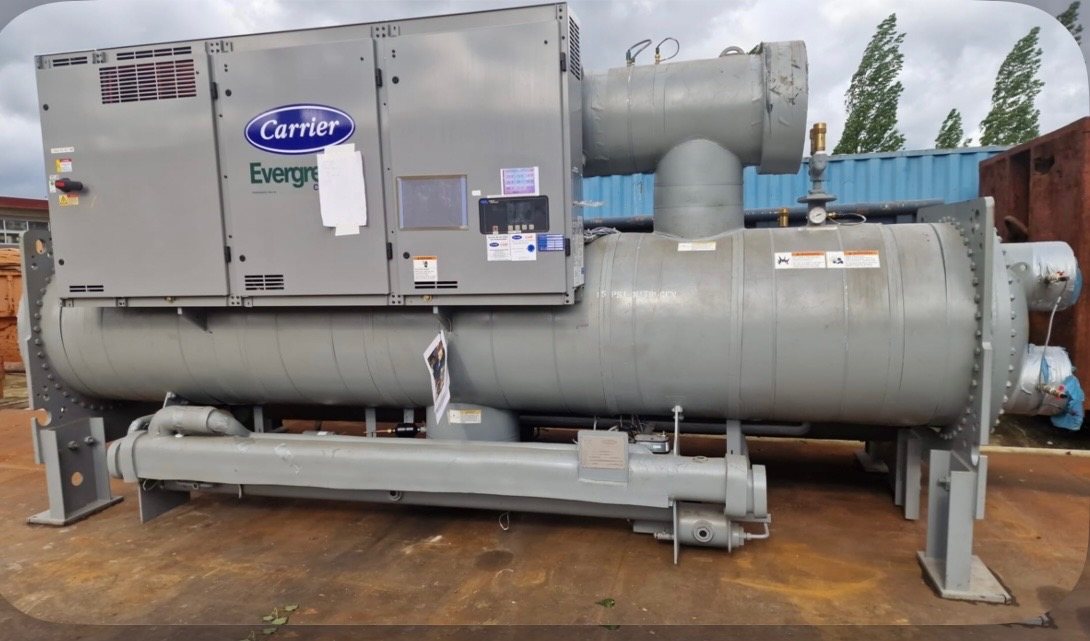
We buy water-cooled and air-cooled centrifugal, screw, and scroll chillers across all tonnages and refrigerants, including units from 20 to 2,000+ tons. Each inquiry is reviewed for equipment fit and site scope; not every inquiry leads to a purchase.
Confirm what is being sold and who can release it
Identify the owner of the machine and the person authorized to discuss a sale. If the chiller is part of a broader retirement, repowering, or equipment replacement, explain how the proposed sale relates to that project. A machine marked for eventual removal may still be needed until another decision or plant activity is complete.
Provide the manufacturer, model, serial number, capacity, refrigerant, and location if known. A clear asset designation helps avoid confusing the unit with similar machinery nearby. We can discuss incomplete information; the seller does not need to operate or test the chiller.
Account for plant operating and clearance requirements
An operating plant may control access to equipment through site-specific work authorization and clearance processes. Explain who coordinates those requirements and whether plant operations, maintenance, security, or a project contractor must review the removal plan. An equipment sale does not replace the site’s own release and authorization decisions.
Describe relevant dependencies, including adjacent operating machinery or shared utilities, without assuming that a general outage window is available. Existing drawings and operating history can support the review. The buyer should work with the plant’s designated contacts to define the appropriate boundaries and sequence.
Separate the purchased machine from shared systems
A chiller can connect to electrical distribution, piping, controls, and other equipment that stays at the site. Identify the proposed sale boundary and any known shared connections. Controls, starters, pumps, and auxiliary components should be named individually if they are intended to be included; their presence nearby does not automatically make them part of the sale.
We handle and cover the required disconnects and refrigerant recovery for the purchased chiller. Those activities must be coordinated with the plant’s procedures and the agreed scope. The seller is not asked to disconnect the equipment or handle refrigerant.
Describe lifting and transport constraints early
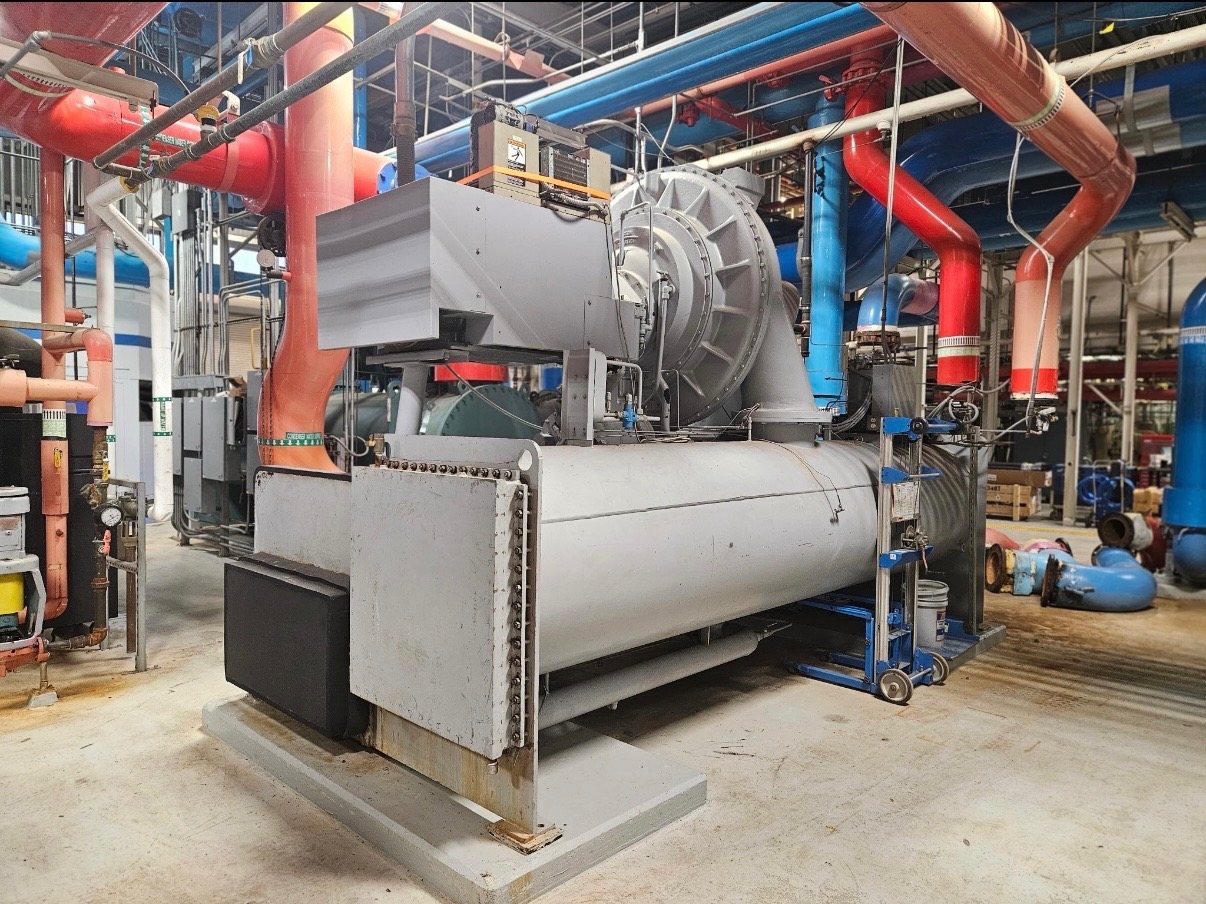
A power site may have congested equipment areas, overhead obstructions, restricted roads, or limited space near the chiller. Share what is known about unit dimensions, access openings, floor capacity, the proposed travel path, and the loading area. An outdoor air-cooled machine and a large water-cooled unit inside a building may require very different approaches.
We handle and cover crane work, rigging, loading, freight, and hauling within the agreed purchase scope. Tell us about any site restrictions affecting these activities so they can be evaluated before an offer is finalized; do not arrange or perform rigging to make an inquiry.
Explain condition using existing information
Tell us whether the chiller is operating, offline, or of uncertain status, and share known damage, missing components, or incomplete records. Existing nameplate and equipment photographs can help, provided the site permits them. Maintenance history is useful when available, but a gap in the records is better stated plainly than filled with assumptions.
No testing by the seller is required. You do not need to energize the machine or run a demonstration. We use the information available and the proposed scope to evaluate whether a purchase makes sense.
Compare the cash offer with the defined work
We make cash offers and provide payment upfront under the accepted purchase terms. An offer reflects the identified equipment and the work involved, including buyer-covered recovery, disconnects, crane, rigging, loading, freight, and hauling. Review whether other proposals include the same responsibilities before comparing the amounts.
Confirm the equipment list, access assumptions, exclusions, and the process for resolving changes in scope before accepting. The plant retains its own operational and approval decisions; the purchase terms should make clear which removal work the buyer is taking on.
Prepare a useful first inquiry
Send the details already at hand: unit identification, approximate tonnage, current status, location, available photographs, and a brief description of site access. Mention any ownership, release, or concurrent-project questions that could affect the asset. You can flag unknowns instead of investigating them through physical work on the chiller.
We will review the proposed sale, discuss the plant’s constraints, and determine whether we can make a cash offer. A clear conversation at the outset helps distinguish the chiller purchase from broader plant retirement work that may involve other assets and contractors.